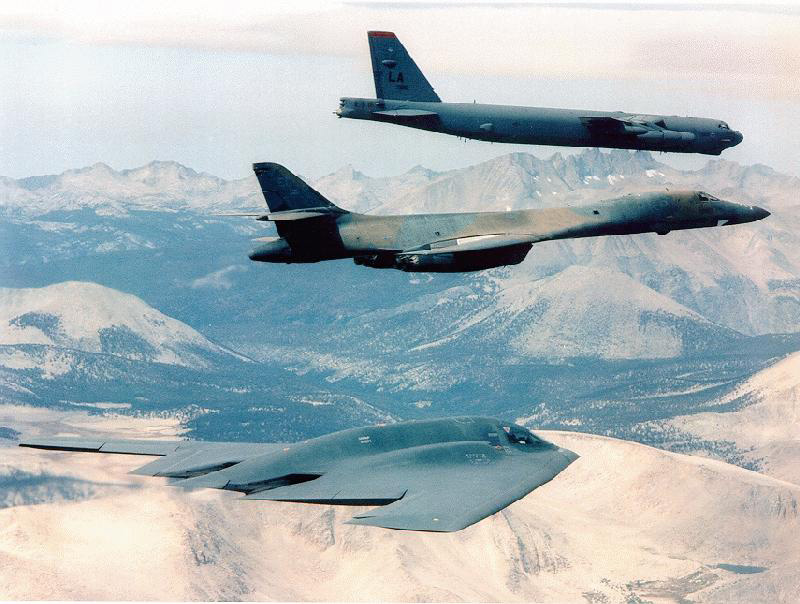
War is filled with difficult decision making and while the last thing on anyone’s mind while risking their lives for their homes is games, they may want to reconsider that. Game Theory is an integral part of any good strategy, because each side will be looking to take advance of the optimal strategy.
Table:
|
| A | B | Oddments |
| A | 60 | 100 | 40 |
| B | 100 | 80 | 20 |
| Oddments | 40 | 20 |
|
(Left A: unprotected bomber, Left B: protected bomber, Top A: attack on unprotected, and Top B: attack on protected)
Explanation: The table above is from an example entitled The Hidden Object. In this example, there is a military involving two bombers. One bomber contains, unsurprisingly, a bomb while the other has jamming equipment. An enemy jet will get one chance to take down a bomber, but they will only be able to take down one of them. Another fact is that one of the bombers can get protection from the other. These example leads to two questions, which bomber should carry the bomb and which bomber should the enemy fight?
In this example we are given the percent rates of survival for the bombers: 60% for the bomber in the unprotected role, 80% in the protected role, and 100% if not attacked at all.
Now this is where the elements of Game Theory come in. Taking the information from the table we can calculate that the most optimal strategy for the bombers would have the bomb in the protected location 2/3 of the time. On the other side of the coin, it is best for the enemy jet to attack that location 2/3 of the time. How do we get to this conclusion…
Math: The Oddments on the table are found by taking the difference between the values in each of the rows and columns. So, for the first row the difference between 60 and 100 is 40. These numbers are taken and swap, before being put into fractional form. This results in (20/60, 40/60) for both the rows and columns, which when simplified comes out at (1/3, 2/3). These fractions are then plugged into the values of the chart for the protected position as it is the optimal choice. This will give us the value of the game: (1/3)*(60) + (2/3)*(100) = 86.67%, which is the rate of survival given the optimal strategy of placing the carrier with the bomb in the protected position.
I personal found this to be one of the most compelling examples of real world application of Game Theory. While, it is entertaining to figure out how much someone can win in a rigged game, it is a completely different level of understand to see how the information being taught in this course can change the course of something as large as war.

 Game Portfolio