Sometimes it is hard to see how Game Theory can be applied outside the classroom, games, and a few very select real world situation such as war. However, an example tackled this week in class focuses on the diverse and real application of game theory.
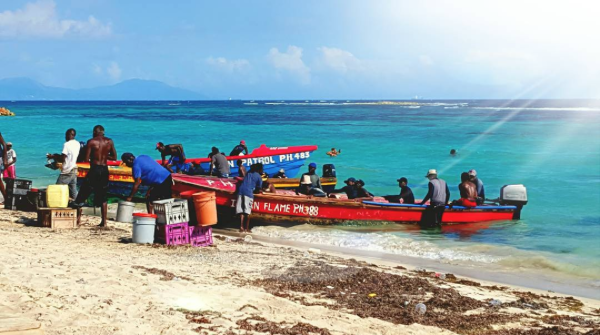
Game theory was applied to a fishing village in Jamaica during 1960 to compare different areas of fishing when the tide was either running or not. The pots used for fishing could be placed on the inner banks, outer banks, or find a place in between (in-out). While there may be more fish in the outer banks, the rougher seas and unpredictability of the sea offer unique problems such as pots breaking and the need for better boats to minimize risks.
|
| Current- Running | Current- Not Running |
| Inside | 17.3 | 11.5 |
| Outer | -4.4 | 20.6 |
| In-Out | 5.2 | 17 |
This table shows the average profits in pounds per canoe. After this data was collected to see what the best strategy was for collecting fish and based only on the numbers it showed that outside was the best choice.
Lesson: However, the importance of this example comes from the fact that the real world did not match up with these numbers, as no one was really only using the outside strategy as the risk of losing pots was too great. While there was a benefit to doing so, it was not a large enough benefit to risk losing everything. The people would rather continually gather the same average amount of fish than take the chance to gain more fish while risking it.
Why this Example Matters: I found this example to be the most thought provoking this week because it when to show that outside factors can play a substantial role in human behavior and must be considered just as much as the data. While the numbers tell you how something should play out in a given scenario, that does not guarantee that is exactly how it will happen. This is especially true when it comes to human behavior, which is why this example grabbed my attention as a psychology major.

 Game Portfolio